Sonoma
Trattore Farms & Winery
A family-run estate where Silicon Valley engineering meets old-world farming, producing Rhone-style wines and award-winning olive oils on 40 steep acres.
Overview
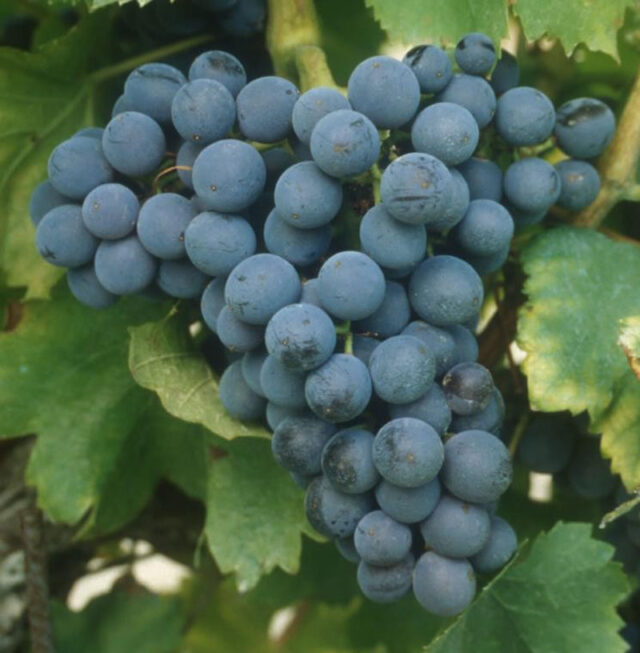
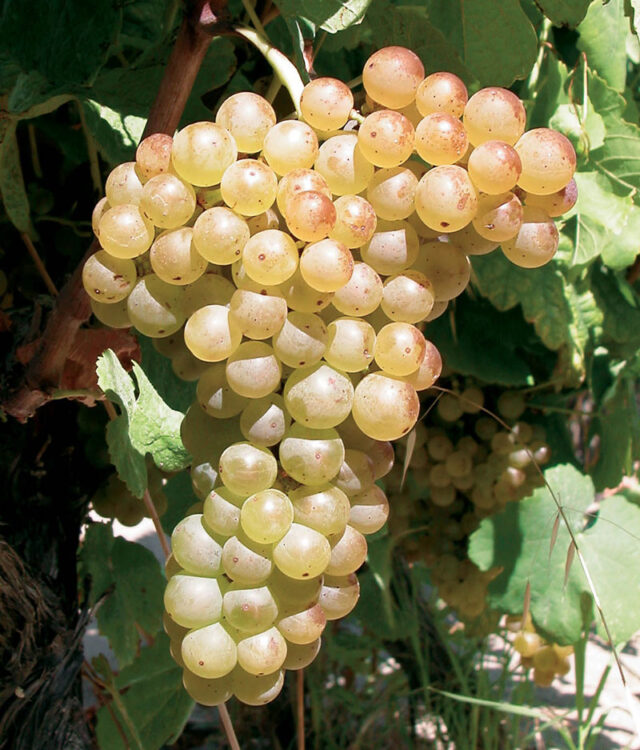
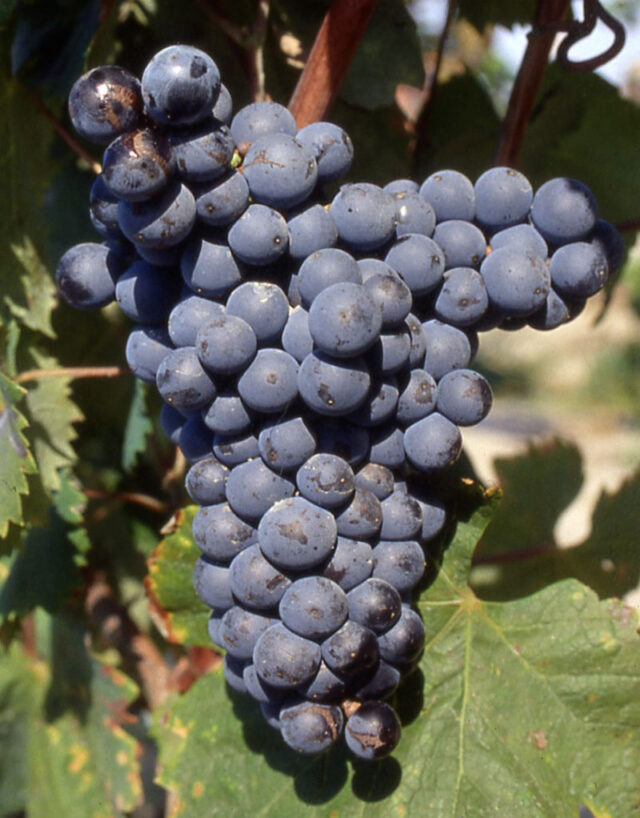
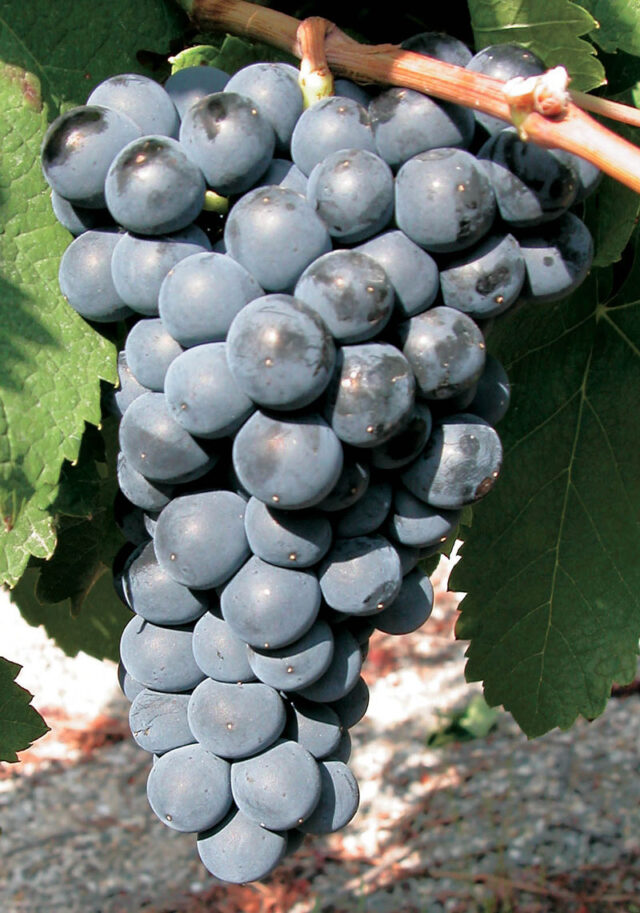
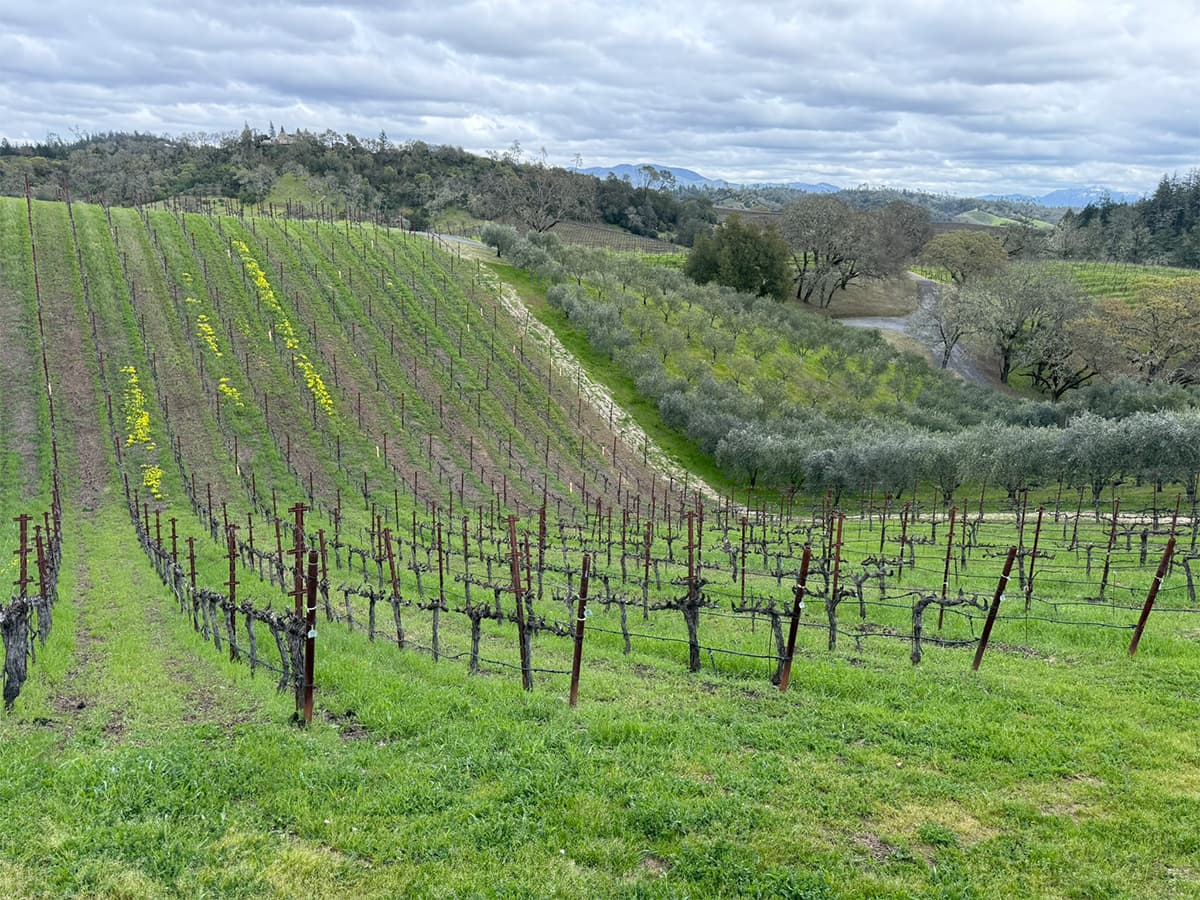
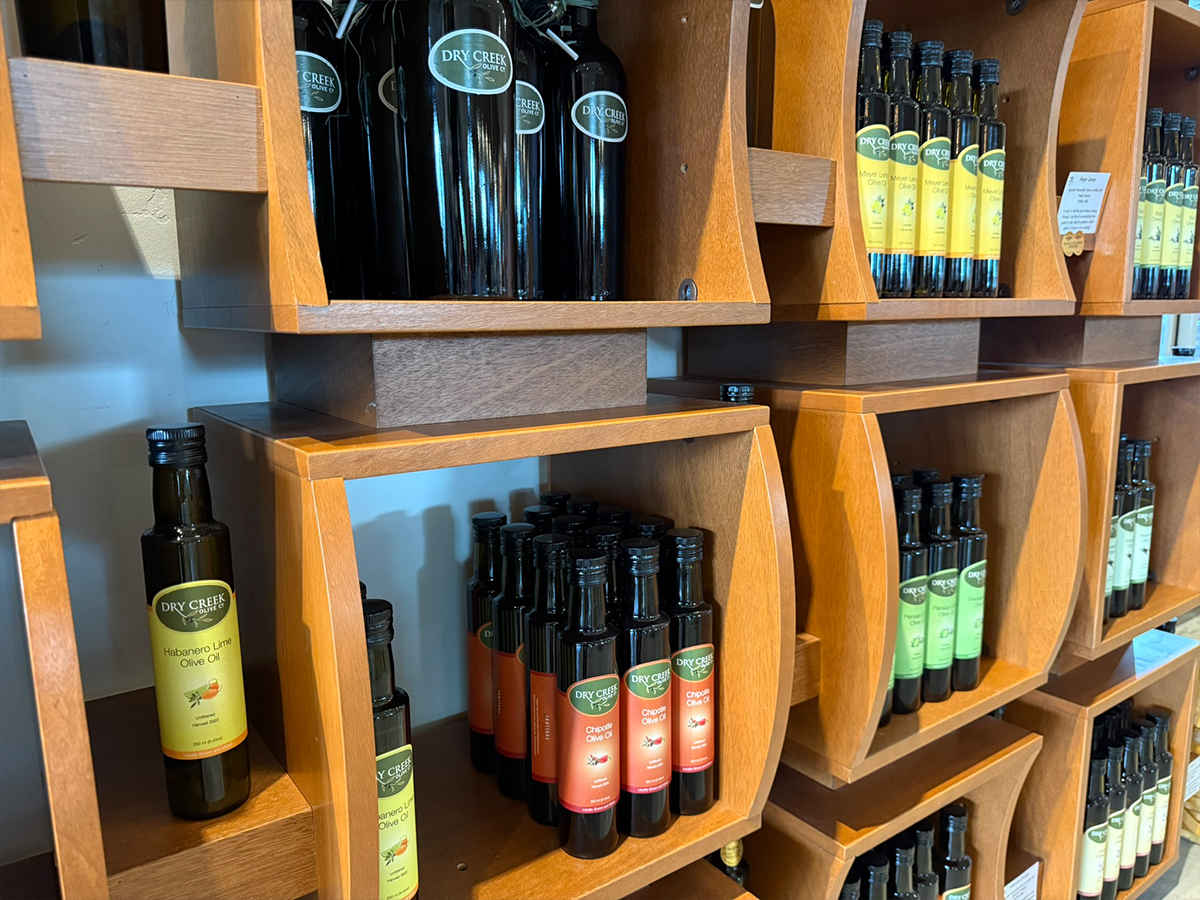
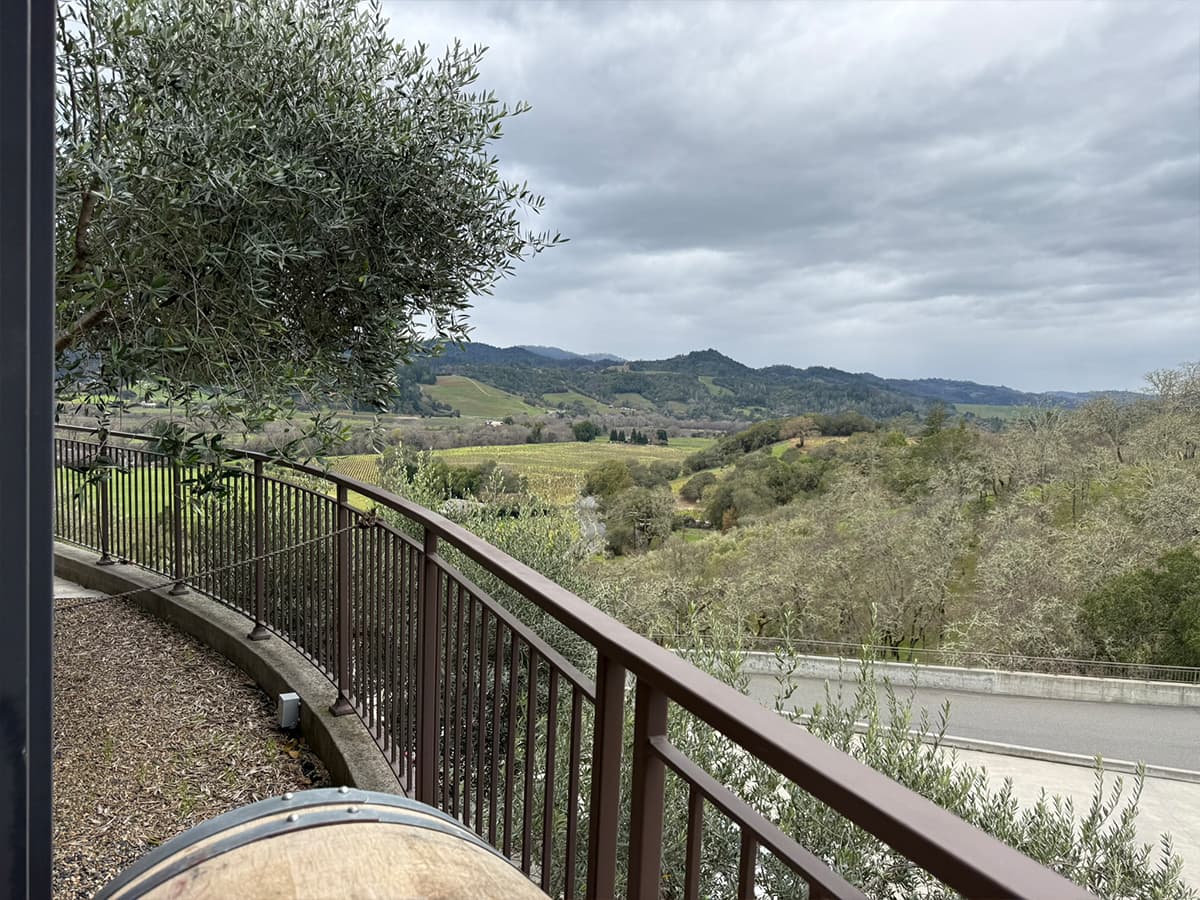
Trattore Farms sits on a 40-acre hilltop on the eastern side of Dry Creek Valley near Geyserville, with 360-degree views that stretch from Lake Sonoma to Geyser Peak and Mount St. Helena. The focus is Rhone varietals (Grenache, Syrah, Mourvedre, Viognier, Marsanne, Roussanne, and more) along with Dry Creek staples like Zinfandel and Petite Sirah, all estate grown across eleven individually managed vineyard blocks. But Trattore is as much an olive oil operation as it is a winery. They grow over 20 olive varietals and mill on-site with equipment imported from Italy. Production is around 3,000 cases, and everything is sold direct to consumer.
History
Tim Bucher grew up on a dairy farm on Westside Road in Russian River Valley. He was pruning vines by eight, making wine by ten, and bought his first vineyard at 16. He went to UC Davis to study agricultural engineering, fell into computer science instead, and spent the next couple of decades in Silicon Valley at companies like Sun Microsystems. But the farming never left him. He purchased the 40-acre Dry Creek property in 1999 and started planting. While clearing land for vineyards, he discovered Mission olive trees dating back over 150 years, which launched the olive oil side of the operation. The first wines were released in 2008, and the hilltop tasting room opened in 2015. His wife Mary Louise, a Stanford-trained engineer and certified Master Miller, runs the olive oil program. Their kids work in the business too. “Trattore” means tractor in Italian, a nod to Tim’s lifelong love of farm equipment.
Sustainability
Sustainability at Trattore isn’t a talking point. It’s baked into how the farm operates. The winery runs on solar energy, recycles water through an on-site treatment plant, and composts all grape and olive pomace back into the soils. The eleven vineyard blocks are sustainably farmed and individually managed by hand, with techniques tailored to each block’s soil, slope, and sun exposure. Tim’s background in engineering shows up in the infrastructure. The whole system is designed to work as a closed loop where very little leaves the property as waste.
Atmosphere
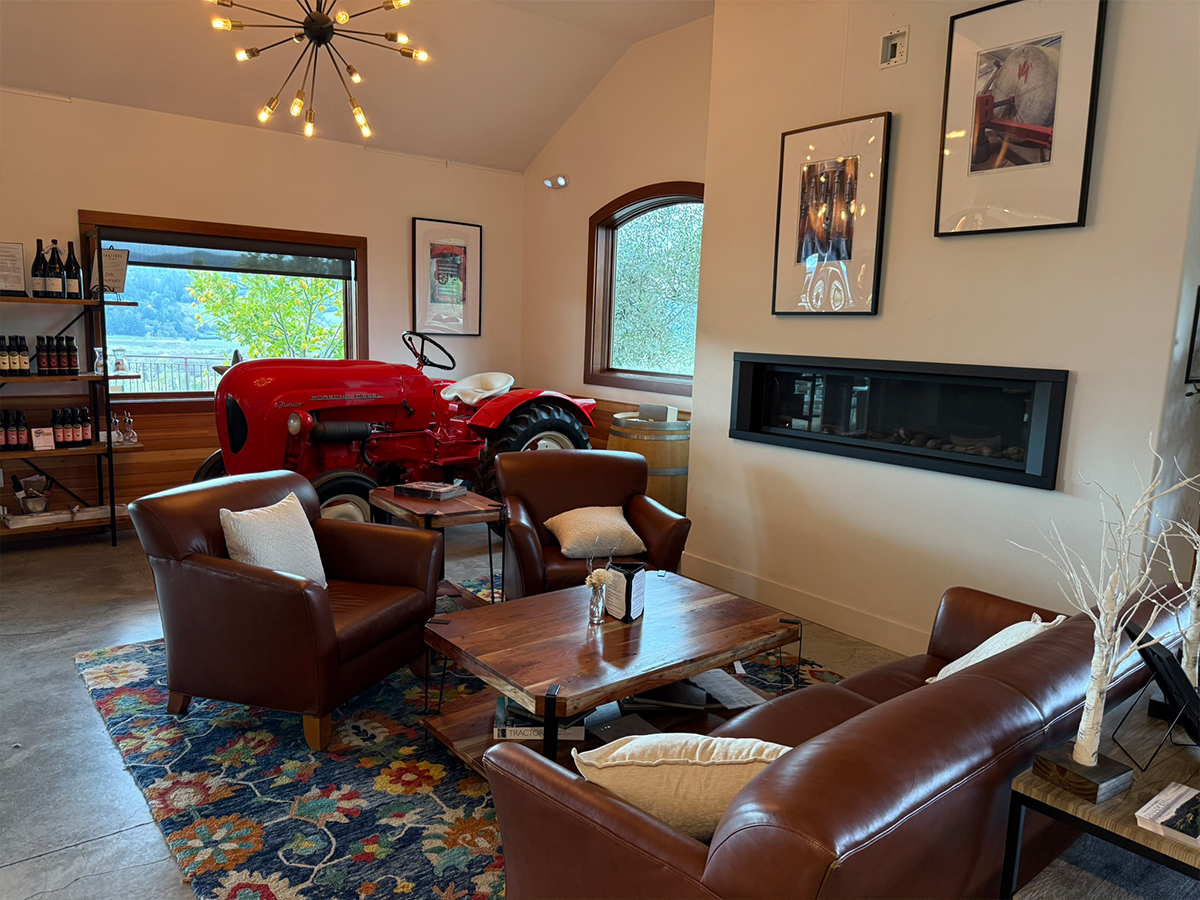
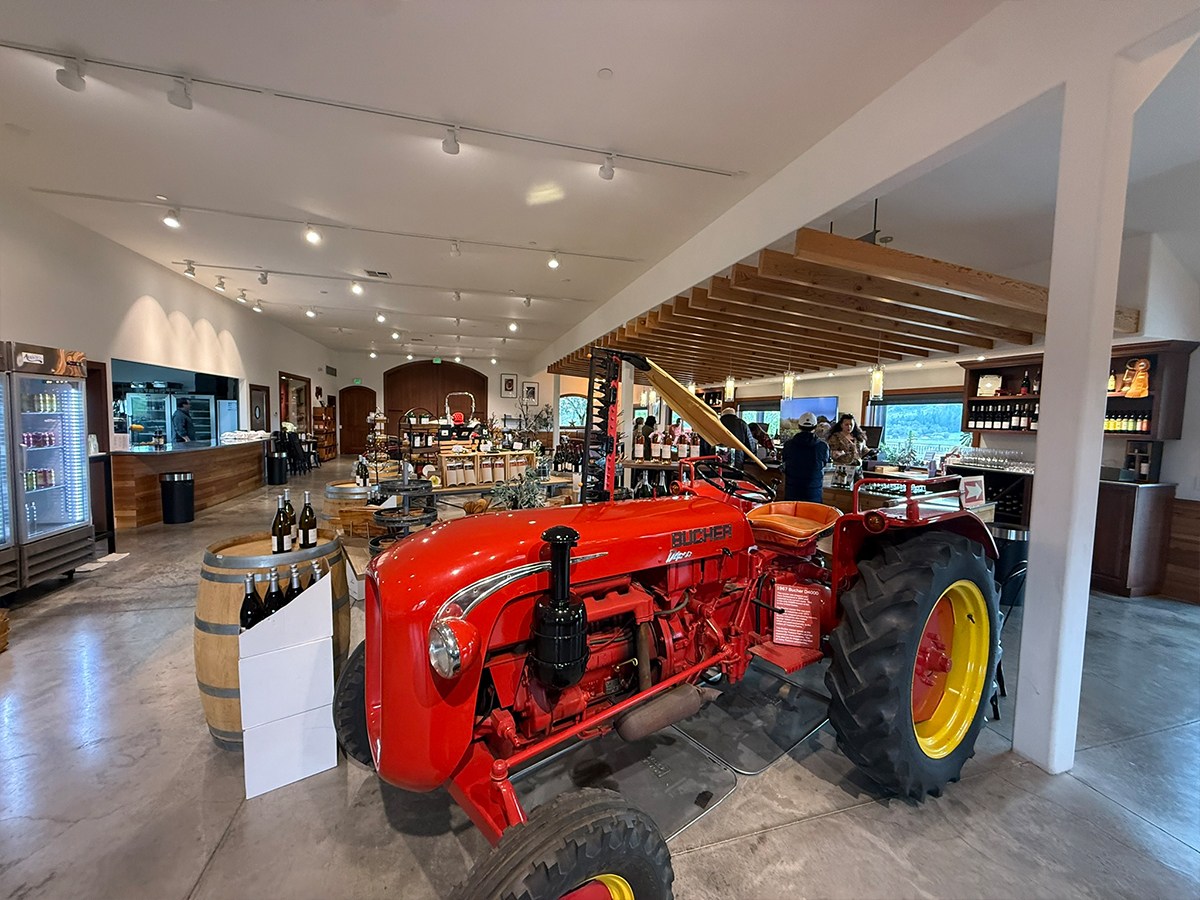
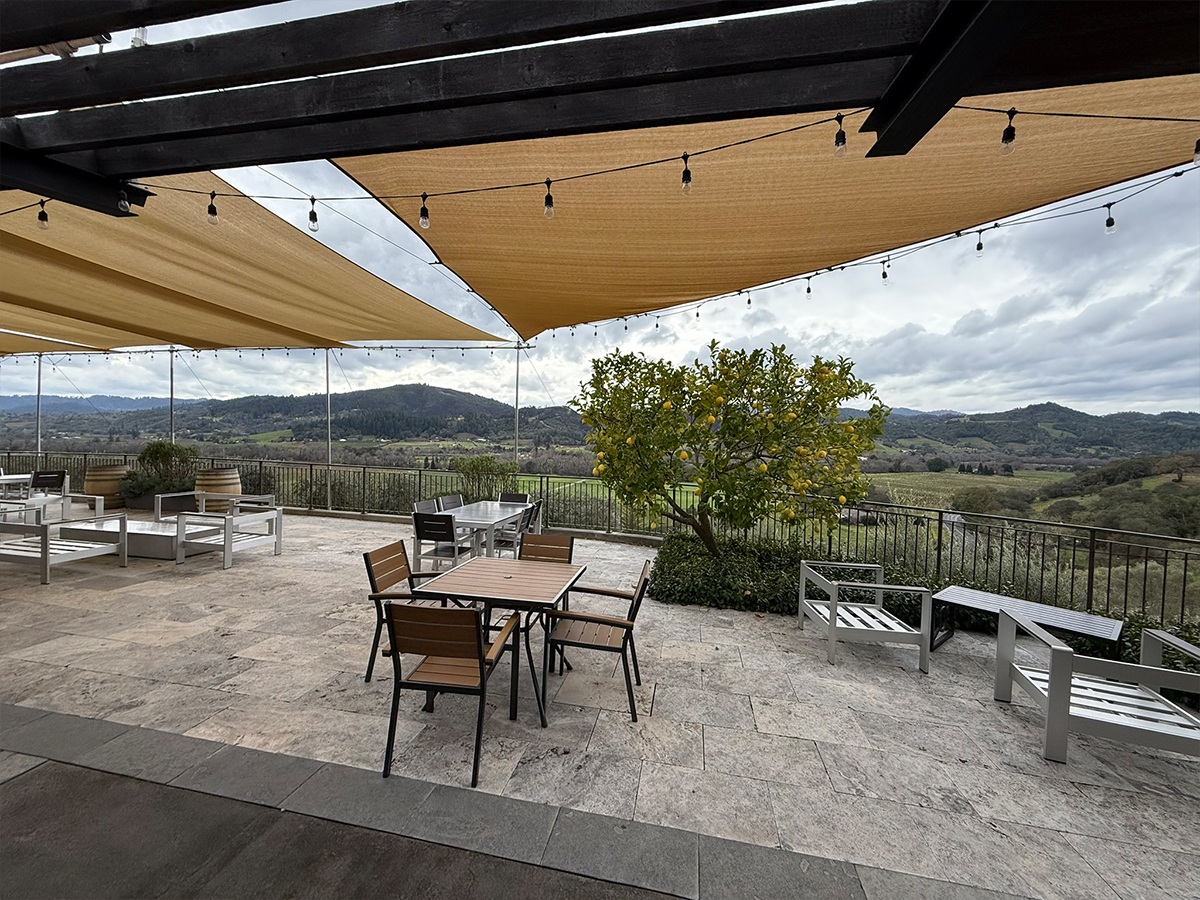
The tasting room is a spacious, airy space perched at the top of the property with floor-to-ceiling views in every direction. One end has a few of Tim’s vintage tractors on display, polished like show cars. The terrace wraps around the building with low-slung couches, high-tops, and unobstructed vineyard panoramas. Olive trees weave through the vineyard blocks in a patchwork that looks more Mediterranean than Northern California. The vibe is relaxed and fun. Kids, dogs, and groups are all welcome. On Sundays from April through October, there’s a wood-fired pizza oven going. It feels more like a working farm that happens to have a great tasting room than the other way around.
Experience
Tastings are seated on the terrace or inside, and you’ll work through a flight of wines and olive oils together. The olive oil component is a genuine differentiator. Most guests have never done a proper oil tasting, and it opens up a whole new conversation. The “Get Your Boots Dirty” tour takes you out on a Kawasaki mule through the vineyards, olive orchards, and mill before finishing with a full tasting. On weekends you might find Tim pouring wine and Mary Louise at the oil bar. The food program is solid too: charcuterie from local purveyors, paninis from their kitchen, and those Sunday pizzas with house-made dough. It’s a place where people settle in for longer than they planned.
Unique Elements
- The on-site olive mill uses both a traditional granite stone mill and a modern Pieralisi hammer mill, both imported from Perugia, Italy, and the olive oil tasting is as much a draw as the wine.
- Heritage Mission olive trees discovered on the property date back over 150 years, and over 20 olive varietals now grow alongside the vines in a European-style integrated farming approach.
- The entire operation runs on solar power with an on-site water treatment plant and an organic composting system that returns grape and olive pomace to the soil.